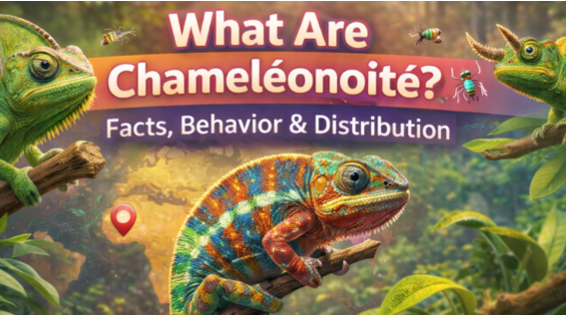
Chameleónovité, commonly referred to as the chameleon family, are among the most distinctive and intriguing reptiles in the animal kingdom. Known for their color-changing abilities, independently moving eyes, and slow, deliberate movements, chameleons have fascinated humans for centuries. However, beyond their famous camouflage skills lies a complex group of reptiles with unique behaviors, specialized anatomy, and a wide geographic distribution.
This article explores what Chameleónovité are, their defining facts and behaviors, and where they are found across the world. Whether you are a student, nature enthusiast, or simply curious, this guide provides a complete and accessible overview.
Understanding Chameleónovité
Chameleónovité is a biological family within the reptile order Squamata. This family includes nearly 200 known species, making it one of the most diverse reptile families in terms of form, size, and adaptation.
Although many people use the term “chameleon” casually, Chameleónovité represents a scientifically defined group characterized by:
- Highly specialized anatomy
- Visual hunting strategies
- Arboreal lifestyles in most species
- Strong dependence on environmental conditions
Chameleons are not closely related to lizards such as geckos or iguanas, despite superficial similarities. Their evolutionary path has led to a set of traits found almost nowhere else in the reptile world.
Key Facts About Chameleónovité
1. Unique Color-Changing Ability
One of the most well-known facts about Chameleónovité is their ability to change color. Contrary to popular belief, this ability is not primarily for camouflage. Instead, color changes are used for:
- Communication with other chameleons
- Regulating body temperature
- Displaying stress, dominance, or readiness to mate
Color change occurs due to specialized layers of skin cells that reflect light differently depending on the chameleon’s emotional and physical state.
2. Independently Moving Eyes
Chameleónovité possess eyes that can move independently of each other. This allows them to:
- Scan their surroundings without moving their bodies
- Watch for predators while hunting prey
- Focus both eyes forward for precise depth perception when striking
This visual system is one of the most advanced among reptiles.
3. Long, Projectile Tongues
Chameleons capture prey using an extendable tongue that can reach up to twice their body length. The tongue launches rapidly, sticks to insects using a suction-like tip, and retracts just as quickly.
4. Specialized Feet and Tail
Their feet are designed for gripping branches, with toes arranged in opposing groups. Many species also have a prehensile tail, which acts as a fifth limb for balance and stability.
Behavior of Chameleónovité
Solitary Lifestyle
Most Chameleónovité species are solitary animals. They prefer to live alone and may become stressed or aggressive when encountering others of their species outside the breeding season.
Males, in particular, are often territorial and will display aggressive behaviors toward rivals.
Communication Through Color and Posture
Instead of vocal sounds, chameleons communicate primarily through:
- Color changes
- Body inflation
- Head movements
- Postural displays
Bright colors may signal dominance or mating readiness, while darker or dull colors often indicate stress or submission.
Slow and Deliberate Movement
Chameleons move slowly and deliberately, often rocking back and forth. This movement helps them blend in with swaying branches and avoid detection by predators.
Feeding Behavior
Chameleónovité are primarily insectivores, feeding on:
- Flies
- Crickets
- Grasshoppers
- Beetles
Larger species may occasionally consume small vertebrates. Their hunting strategy relies on patience, precision, and stealth rather than speed.
Daily Activity Patterns
Chameleons are diurnal, meaning they are active during the day. They rely on sunlight to regulate body temperature and typically rest at night on branches or foliage.
Distribution of Chameleónovité
Global Range
Chameleónovité have a relatively limited global distribution compared to other reptiles. They are found primarily in:
- Africa
- Madagascar
- Southern Europe
- The Middle East
- Parts of South and Southeast Asia
Madagascar: A Biodiversity Hotspot
Madagascar is the most important region for chameleon diversity. Nearly half of all known species are found there, many of which exist nowhere else on Earth.
The island’s varied climates and isolation have allowed chameleons to evolve into a wide range of sizes and forms.
African Mainland
Africa hosts a large number of Chameleónovité species across forests, savannas, and mountainous regions. These species are often well adapted to seasonal changes and varying humidity levels.
Europe and Asia
Only a small number of species inhabit southern Europe and parts of Asia. These chameleons tend to live in warmer climates and are more tolerant of seasonal temperature fluctuations.
Habitat Preferences
Most Chameleónovité species are arboreal, living in:
- Trees
- Shrubs
- Dense vegetation
Some species, however, are terrestrial, spending most of their time near the ground. Habitat choice depends on:
- Species size
- Climate
- Availability of prey
- Predator presence
Humidity and temperature play a critical role in their survival, making them highly sensitive to environmental changes.
Adaptations for Survival
Chameleónovité have evolved several adaptations that enhance survival:
- Camouflage through color modulation
- Precision hunting tools
- Strong gripping limbs
- Advanced visual perception
These adaptations allow them to thrive in complex environments where stealth and precision are more valuable than speed.
Conservation and Threats
Many Chameleónovité species face increasing threats, including:
- Habitat destruction
- Deforestation
- Climate change
- Illegal wildlife trade
Because many species have limited ranges, even small environmental changes can have significant impacts. Conservation efforts focus on habitat protection, legal trade regulation, and public education.
Frequently Asked Questions (FAQ)
What does Chameleónovité mean?
Chameleónovité refers to the scientific family name for chameleons, encompassing all recognized chameleon species.
Can all chameleons change color?
Yes, all chameleons can change color to some degree, but the range and intensity vary by species.
Do chameleons live in groups?
No. Most Chameleónovité species are solitary and only interact during mating or territorial encounters.
Where are chameleons most commonly found?
They are most commonly found in Africa and Madagascar, with smaller populations in Europe and Asia.
Are chameleons dangerous to humans?
No. Chameleónovité are harmless to humans and generally avoid interaction.
Why do chameleons move so slowly?
Slow movement helps them avoid detection by predators and blend into their surroundings.
Final Thoughts
Chameleónovité are a remarkable family of reptiles with extraordinary adaptations, behaviors, and ecological roles. Their specialized anatomy and reliance on environmental conditions make them both fascinating and vulnerable. Understanding their behavior and distribution is essential for appreciating their role in nature and the importance of conservation efforts.
As habitats change and environmental pressures increase, awareness and responsible action are crucial to ensuring the survival of these unique reptiles for future generations.
Disclaimer
This article is intended for educational and informational purposes only. It does not promote or encourage the capture, ownership, or trade of wild chameleons. Chameleónovité species may be protected under local or international wildlife laws. Readers are responsible for complying with all applicable regulations and should seek professional guidance before interacting with wildlife. The author and publisher assume no liability for actions taken based on this information.