Solar panels generate electricity when the sun is shining — but what happens after dark, or during a cloudy stretch? That gap is where energy storage becomes critical. Choosing the right PV storage battery can determine how effectively your solar system performs around the clock, not just during peak sunlight hours. Understanding the basics of how these batteries work — and what separates a good one from a great one — helps homeowners and businesses make informed decisions.
What Is a PV Storage Battery?
A PV storage battery is a rechargeable energy unit connected to a photovoltaic solar system. It captures excess electricity generated during the day and stores it for use when solar production drops — typically at night or during overcast weather.
Without storage, surplus solar energy is either fed back to the grid or wasted entirely. A battery for solar systems changes that equation by giving users direct access to the energy they’ve already generated, reducing dependence on utility power and lowering electricity bills over time.
How Solar Energy Storage Actually Works
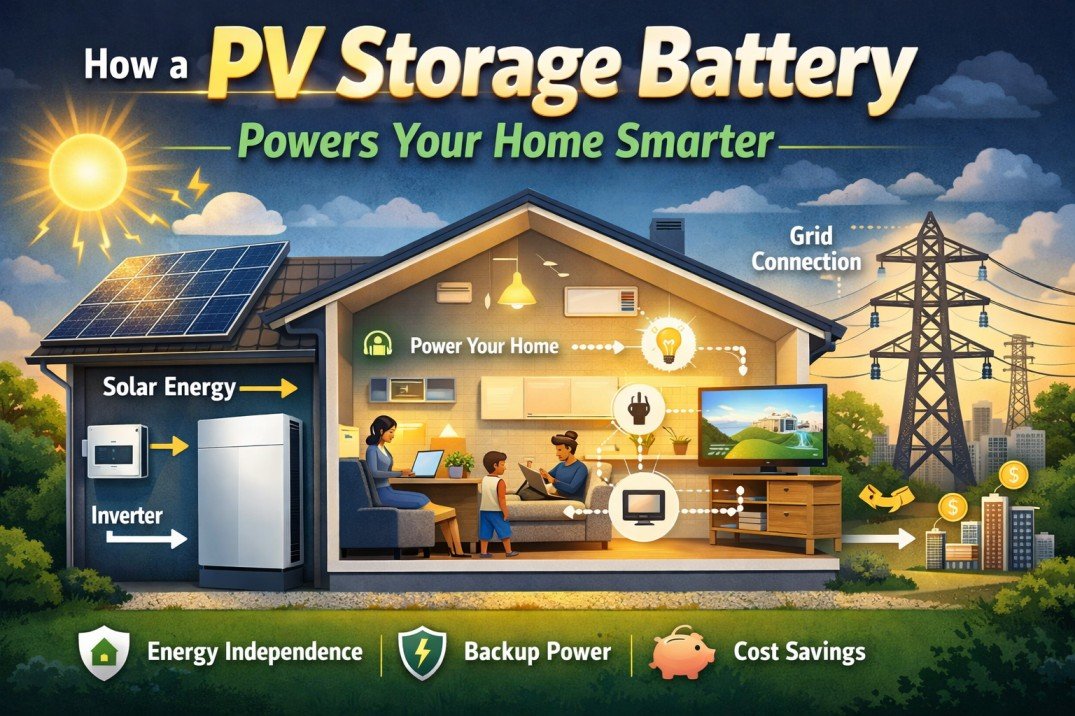
When solar panels produce more electricity than a home or facility is currently using, the excess flows into the battery bank instead of the grid. An inverter manages the conversion between DC (direct current) from the panels and AC (alternating current) used by most appliances.
Once the battery reaches full capacity, any remaining surplus can still be exported to the grid if net metering is available. When the sun goes down or demand spikes, the system draws from stored energy first — before pulling from the utility.
This cycle repeats daily, making PV solar batteries a core component of any serious energy independence strategy.
Key Specifications to Understand Before Buying
Not all solar PV storage batteries are built the same. Here are the most important specs to evaluate:
- Capacity (kWh): The total amount of energy a battery can store. Higher capacity means longer backup duration.
- Depth of Discharge (DoD): The percentage of the battery’s capacity that can be safely used. A 90% DoD is generally better than 80%.
- Round-Trip Efficiency: How much energy is retained after a full charge-discharge cycle. Look for 90% or higher.
- Cycle Life: The number of full charge-discharge cycles before performance degrades significantly. More cycles mean longer usable life.
- Chemistry Type: Lithium iron phosphate (LFP) batteries are currently favored for their safety profile, thermal stability, and long cycle life compared to older lead-acid options.
Understanding these figures helps match the right battery to a specific energy profile rather than simply buying the largest or cheapest option available.
Residential vs. Commercial Storage Needs
Homeowners typically need between 5 kWh and 20 kWh of storage capacity, depending on daily consumption and how many critical loads they want to back up. A single battery unit often covers essential appliances like lighting, refrigeration, and device charging.
Commercial installations operate at a different scale. Facilities with high daytime energy demand — warehouses, offices, retail spaces — benefit from larger battery arrays that can shave peak demand charges and provide backup during outages. The core technology is the same; the sizing and configuration differ significantly.
Why Storage Is Becoming Standard, Not Optional
Grid reliability concerns, rising utility rates, and expanded access to time-of-use pricing have all pushed energy storage from a niche upgrade to a practical necessity. In many regions, pairing solar panels with a battery for a solar system now qualifies for tax incentives and rebates that reduce the upfront cost considerably.
The payback period for solar PV storage batteries has shortened as battery costs have dropped roughly 80% over the past decade. For new solar installations, adding storage from the start is often more cost-effective than retrofitting later.
Conclusion
A PV storage battery bridges the gap between when solar energy is produced and when it’s actually needed. By understanding capacity, efficiency, cycle life, and chemistry, buyers can select a system that genuinely fits their usage patterns. As grid dynamics continue to shift, energy storage is no longer a luxury add-on — it’s a practical tool for getting the most value out of any solar investment.