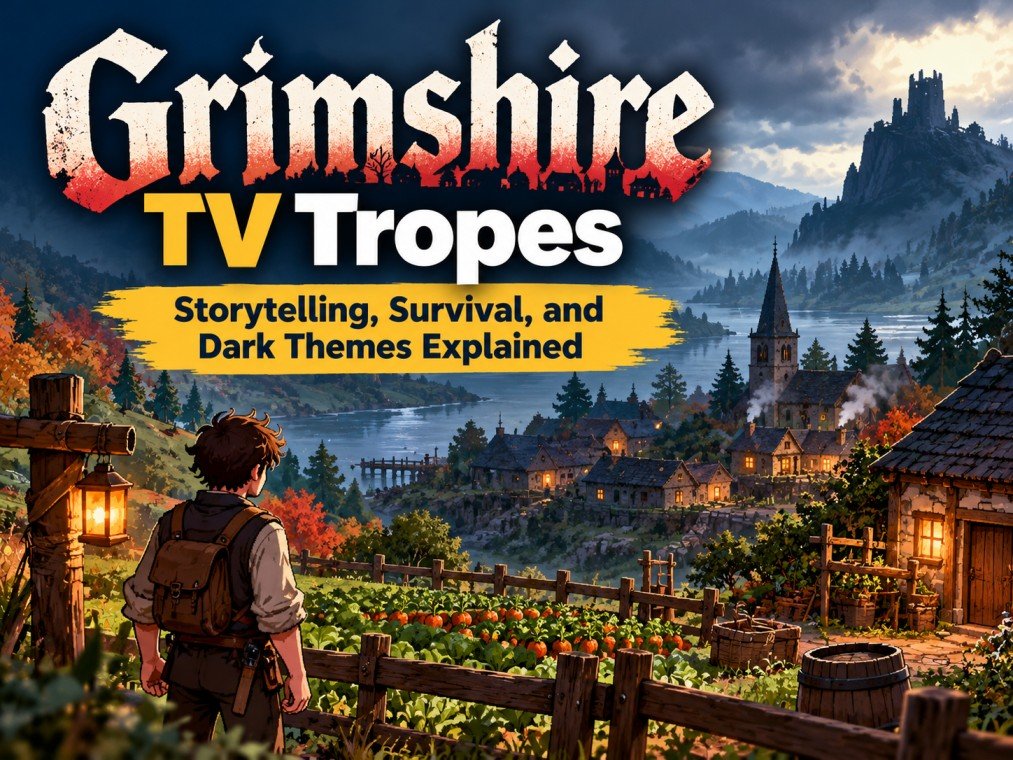
Grimshire combines the familiar pleasures of farming simulation with a darker story about survival, disease, and community. Instead of focusing only on growing crops and developing a farm, the game challenges players to prepare for a deadly plague that threatens an isolated village.
For readers searching for Grimshire TV Tropes, the game offers an interesting opportunity to explore storytelling patterns, character relationships, survival challenges, and the contrast between peaceful village life and dangerous circumstances.
Understanding these narrative elements can help players appreciate how Grimshire creates tension and gives everyday activities a greater purpose.
What Is Grimshire?
Grimshire is an indie farming and survival simulation game developed by Acute Owl Studio. Set in a remote village, it combines farming, exploration, resource management, and community survival.
Players must grow crops, collect resources, preserve food, and help villagers prepare for the dangers surrounding their settlement. These activities are essential because the community faces a serious threat that cannot be overcome through farming alone.
Unlike traditional farming games that primarily emphasize relaxation and personal progress, Grimshire introduces uncertainty and consequences. Every decision about food, supplies, and preparation can become important as players work to protect the village.
Major Storytelling Tropes in Grimshire
1. The Isolated Community
One of the most recognizable storytelling conventions associated with Grimshire is the isolated community. The village’s remote setting creates an environment where residents must depend on their own resources and relationships.
In fiction, isolated communities often become the center of suspense because outside assistance may be difficult to obtain. Limited resources and shared dangers can strengthen relationships while also creating conflict.
This setting makes the village itself an important part of the experience rather than simply a location for farming activities.
2. Survival Against the Odds
Survival against overwhelming challenges is a common theme in games, movies, and novels. In Grimshire, the threat of a deadly plague gives ordinary tasks a greater purpose.
Growing vegetables, collecting materials, and preserving food are not merely routine activities. They help the community prepare for uncertain circumstances.
This theme rewards careful planning and persistence, encouraging players to think about long-term survival rather than immediate rewards.
3. Cozy Setting, Dark Reality
Farming simulations are usually associated with peaceful environments, friendly characters, and satisfying daily routines. Grimshire contrasts these familiar elements with disease, scarcity, and the possibility of losing villagers.
This contrast creates a distinctive atmosphere. Activities that would normally feel relaxing become part of a larger struggle to protect the community.
The combination of comfort and danger demonstrates how a familiar setting can become more engaging when the stakes change.
4. Resource Management as Storytelling
Resource management is central to Grimshire’s gameplay. Players must consider how to grow crops, gather supplies, preserve food, and prepare for future needs.
These mechanics also support the game’s narrative. When resources are limited, decisions become more meaningful, and the consequences of poor preparation can affect more than an individual farm.
This approach shows how gameplay systems can communicate tension without relying entirely on dialogue or cutscenes.
5. Community Over Individual Success
Another important theme is the relationship between individual progress and collective survival.
In many farming games, success is measured through farm expansion, personal wealth, or the development of new facilities. Grimshire adds another consideration: the well-being of the village.
Players must think beyond their own immediate needs and consider how their actions contribute to the wider community. This creates a stronger connection between resource management and the game’s survival premise.
How Grimshire Uses Familiar Gaming Conventions
Grimshire combines recognizable farming mechanics with survival-oriented challenges. Players can cultivate crops, gather materials, explore their surroundings, and contribute to village development.
The difference lies in how these activities support the larger threat facing the settlement. Farming becomes preparation, gathering becomes a survival necessity, and community development becomes part of a broader effort to protect the villagers.
For players interested in storytelling, this combination illustrates how familiar mechanics can create a distinctive experience when placed within a darker narrative.
Why Might TV Tropes Fans Enjoy Grimshire?
Players who enjoy analyzing storytelling patterns may find several aspects of Grimshire interesting.
- Narrative tension: A dangerous threat changes the meaning of everyday activities.
- Character relationships: Shared challenges make community connections important.
- Environmental storytelling: The village setting reinforces themes of isolation and vulnerability.
- Meaningful preparation: Resource-management decisions connect gameplay with survival.
- Genre contrast: Peaceful farming mechanics exist alongside darker themes.
These elements offer opportunities to discuss how games use established storytelling conventions while creating their own atmosphere and identity.
Frequently Asked Questions (FAQs)
1. What is Grimshire?
Grimshire is an indie farming and survival simulation game in which players manage a farm, collect resources, and help an isolated village prepare for a deadly plague.
2. What does Grimshire TV Tropes mean?
The phrase refers to examining Grimshire through recurring storytelling conventions, including isolated communities, survival against the odds, limited resources, and the contrast between peaceful environments and danger.
3. Is Grimshire a traditional farming game?
Grimshire includes traditional farming activities, but it also incorporates survival challenges, resource management, and a darker community-focused storyline.
4. What makes Grimshire different from other farming games?
Its combination of farming, food preservation, village development, and the threat of a plague creates a stronger emphasis on preparation and community survival.
5. What storytelling themes appear in Grimshire?
Major themes include isolation, survival, cooperation, scarcity, responsibility, and the contrast between a peaceful setting and a dangerous situation.
6. Is Grimshire suitable for players who enjoy survival games?
Players who enjoy planning, gathering resources, managing supplies, and preparing for difficult circumstances may appreciate its survival-oriented gameplay.
7. Can storytelling tropes help game developers?
Yes. Studying storytelling tropes can help developers understand familiar narrative patterns, build engaging conflicts, and create more meaningful character relationships. Tropes can also be adapted or challenged to make a story feel original.
8. What is the difference between a trope and a cliché?
A trope is a recognizable storytelling pattern, such as an isolated village or a reluctant hero. A cliché is generally a familiar idea used in a predictable or unoriginal way. A trope can still be creative when presented with a fresh perspective.
Conclusion
Grimshire offers an interesting combination of farming simulation, survival mechanics, and dark storytelling. Its isolated village, resource-management challenges, and community-focused objectives provide useful examples of how familiar gaming conventions can support a more consequential narrative.
For fans interested in Grimshire TV Tropes, exploring these themes can provide a deeper understanding of how setting, gameplay, and survival challenges work together to shape the player’s experience.