Why the IL-33 ELISA Kit is Used in Autoimmune Disease Study
Given how complex the human immune system is and how contracting an autoimmune disease makes it start attacking the body, and the fact that we’ve found zero cure for it, studying these conditions becomes even more important. To move closer to a breakthrough, scientists must look past the broad symptoms and focus on the microscopic “misfires” that trigger these internal attacks.
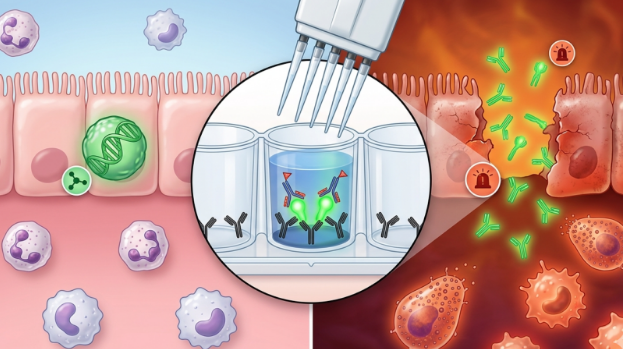
In the complex architecture of our biological defenses, one of the most intriguing sentinels discovered in recent decades is Interleukin-33 (IL-33). Often referred to by scientists as an “alarmin,” IL-33 stays tucked away inside the nuclei of our cells until tissue damage occurs. When these cells are stressed or destroyed—as is often the case in chronic autoimmune states—IL-33 is released, acting as a molecular flare to alert the immune system.
However, studying and researching autoimmune diseases using IL-33 isn’t that easy; researchers need specialized tools like ELISA R&D IL-33.
This blog will explore the biological significance of IL-33 and why the Enzyme-Linked Immunosorbent Assay (ELISA) format is the gold standard for studying its role in autoimmune diseases.
The Alarmin Concept: Understanding IL-33
To understand why researchers specifically use the IL-33 ELISA kit, one must first understand the protein’s unique dual nature.
You see, IL-33 is a member of the IL-1 family, but unlike many of this family’s members, it doesn’t need a complex activation process to start working. It is “constitutively expressed,” meaning it is always present in the lining of our lungs, skin, and blood vessels.
Under normal conditions, IL-33 helps maintain tissue balance; however, in the context of autoimmune diseases, the regulation of IL-33 goes haywire. Instead of a controlled alarm, the body experiences a “stuck siren,” leading to the chronic inflammation and tissue destruction that makes these diseases so devastating to live with.
Why Use ELISA for IL-33 Research?
Quantification of “Soluble” vs. “Bound” Protein: Researchers use ELISA kits to precisely measure the concentration of free IL-33 in a patient’s serum. This quantitative data allows scientists to calculate the ratio of the “alarm” to the “decoy” (sST2), providing a clearer picture of the disease state.
High Sensitivity for Clinical Samples: Autoimmune diseases often involve low-level, chronic inflammation. IL-33 may be present in picogram-per-milliliter (pg/mL) concentrations. A high-quality ELISA R&D IL-33 kit, such as those provided by AAAbio, is engineered to detect these minute levels.
High Throughput for Drug Discovery: When pharmaceutical companies develop new drugs designed to block specific immune signals, they need to test thousands of samples. The 96-well plate format allows for the rapid testing essential for modern drug development.
IL-33 in Specific Autoimmune Contexts
Because autoimmune diseases are so varied, the way researchers use the ELISA R&D IL-33 kit changes depending on the disease/part of the body they are studying.
- Rheumatoid Arthritis (RA): In the joints of RA patients, IL-33 is often found in high concentrations within the synovial fluid (the lubricant between joints). Researchers use these kits to correlate IL-33 levels with the severity of joint erosion. They’ve discovered that this protein acts like a magnet, recruiting aggressive immune cells that release enzymes to eat away at bone and cartilage.
- Inflammatory Bowel Disease (IBD): The gut is a primary site for IL-33. In patients with Ulcerative Colitis, the “alarm” is constantly sounding. Research utilizing IL-33 ELISA kits has shown that while this protein can help repair the gut lining in small doses, an excess leads to the painful, chronic inflammation characteristic of IBD.
- Systemic Lupus Erythematosus (SLE): Lupus is a complex “multi-organ” attacker. Researchers use IL-33 ELISA kits to monitor damage to the blood vessel linings (endothelial cells). High serum levels of IL-33 often signal that the body’s own antibodies are actively damaging these delicate barriers.
The Role of R&D in Perfecting the IL-33 Kit
When we talk about ELISA R&D, we’re talking about the rigorous work that happens behind the scenes to make sure a kit actually works in a chaotic biological environment. Not all kits are created equal, and for a protein as sensitive as IL-33, precision is everything.
When a company develops an IL-33 kit, they have to solve the “noise” problem. Human blood is a crowded place full of thousands of different proteins. The R&D process ensures the kit has zero cross-reactivity, meaning it won’t accidentally measure a similar-looking protein and give a “false alarm” to the researcher. They also ensure stability, so that whether the kit is used in a lab in New York or a clinic in Tokyo, the results remain identical and reliable.