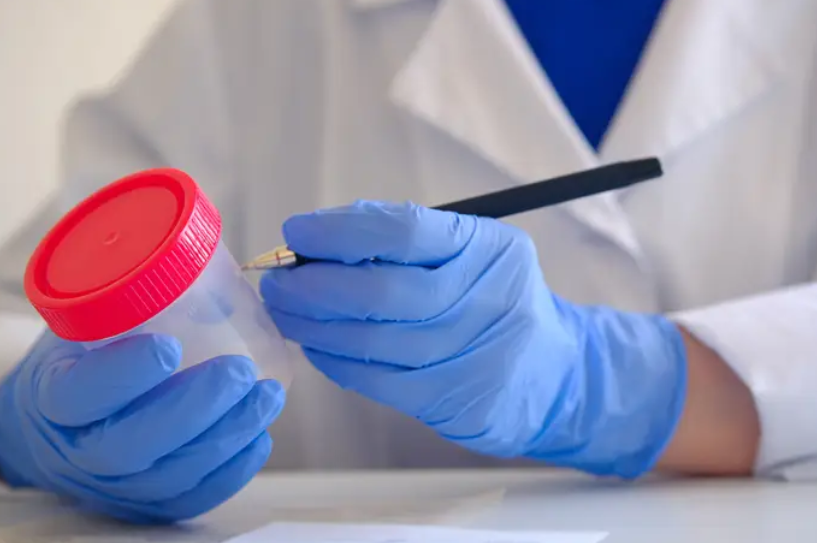
The lab report came on a Thursday. I remember because we’d been planning to go out for dinner that night, some new Italian place a friend had recommended, and instead we sat on the edge of our bed in Bangalore, staring at a printout neither of us fully understood.
Concentration: 8 million/mL. Reference range: ≥15 million/mL.
Progressive motility: 22%. Reference range: ≥32%.
Morphology (strict criteria): 2%. Reference range: ≥4%.
Three numbers, all below the line. The report had a polite footer that said “abnormal clinical correlation advised.” My husband, let’s call him R, read it three times and then said, very quietly, “So this is me, then.”
If you’ve just received a report like this and you’re scrolling through search results at 1 AM trying to figure out what to do next, I want you to know something first: an abnormal semen analysis is not a verdict. It’s a snapshot. And what we did over the next six months changed those numbers significantly. I’m not going to pretend it was easy or that it ended in a guaranteed pregnancy; that part of our story is still being written. But I want to share what we learned, because nobody handed us a roadmap, and I wish someone had.
The first 48 hours: don’t do what we did
What we did was panic-research. R disappeared into Reddit threads about oligospermia. I went down a rabbit hole of YouTube videos in Hindi and English, half of which were trying to sell ayurvedic capsules. We barely slept. By Saturday morning, R had ordered ₹4,000 worth of supplements: zinc, CoQ10, ashwagandha, L-carnitine, selenium, and vitamin E, based on a spreadsheet he’d built from forum posts.
This was a mistake. Not because those supplements are useless (some have decent evidence), but because we hadn’t even seen a doctor yet. We didn’t know why his numbers were low. Treating a problem you haven’t diagnosed is just expensive guessing.
If I could go back, I’d tell us: take a breath. Book an appointment with a urologist or andrologist. Wait.
The repeat test nobody told us about initially
Here’s something I learned that should be on the front page of every fertility website: a single semen analysis isn’t diagnostic. Sperm parameters fluctuate massively due to stress, illness, fever in the past 90 days (sperm production cycle is about 72–90 days), abstinence period, and even how the sample was collected and transported.
The WHO actually recommends two semen analyses, spaced 2–4 weeks apart, before concluding. R’s GP had just handed him one report and a worried face.
We booked with an andrologist who confirmed this on day one. He sent R for a repeat test, this time at a fertility-specific lab where the sample was analysed within 30 minutes of collection. He also ordered:
- Hormonal panel: FSH, LH, testosterone, prolactin, TSH
- Scrotal ultrasound to check for varicocele
- DNA fragmentation index (DFI) is a newer test that looks at the genetic integrity of the sperm, not just the count
- Karyotype and Y-chromosome microdeletion were excluded because the count was below 10 million
The repeat semen analysis came back slightly better, 11 million/mL, 28% motility, but still abnormal. The ultrasound, though, found a grade 2 left-sided varicocele. That single finding rerouted our entire plan.
What “abnormal” actually means in the categories
I didn’t know any of this terminology before. In case it’s useful:
- Oligospermia: low sperm count (<15 million/mL)
- Asthenospermia: poor motility
- Teratospermia: abnormal morphology
- Oligoasthenoteratospermia (OAT): all three, which is what R technically had
- Azoospermia: no sperm at all in the ejaculate (a different conversation)
- High DNA fragmentation: sperm that look fine but have damaged DNA
R’s diagnosis was OAT with a varicocele as a probable contributing cause and a DFI of 31% (anything above 30% is generally considered high). Suddenly, we weren’t dealing with a vague “low sperm count”; we had specific things to address.
The treatment plan we actually followed
Our andrologist gave us a 90-day plan. The logic: since sperm takes about 72–90 days to fully develop, any intervention now wouldn’t show up in numbers until three months later. Patience is unfortunately part of the protocol.
Lifestyle changes (R was not thrilled):
- No alcohol for 90 days
- No hot showers, saunas, no laptop on the lap
- Switched from briefs to boxers
- 30 minutes of daily walking, three gym sessions a week
- Bedtime moved from 1 AM to 11 PM
- Cut out processed food significantly
Targeted supplements (now actually evidence-based, prescribed):
- CoQ10 200 mg twice daily
- L-carnitine 1000 mg twice daily
- Vitamin E + selenium combination
- Zinc 50 mg
- Folate
Medical intervention: R underwent a microsurgical varicocelectomy at the four-month mark. Day-care procedure, two weeks of recovery, no lifting, no sex for three weeks. Honestly, the worst part for him was the post-surgery scrotal swelling, which is alarming to see but apparently normal.
What changed at the 6-month mark
Six months after the original Thursday report, R did another semen analysis. The numbers:
- Concentration: 19 million/mL (up from 8)
- Progressive motility: 38%
- Morphology: 4%
- DFI: 18%
All within normal range. Not spectacular, but normal. We cried in the lab parking lot, which felt slightly ridiculous but also exactly right.
What I want you to take from this
If your partner just got abnormal results, here’s the honest version of what comes next:
- Don’t act on a single test. Repeat it at a fertility-specialist lab.
- See an andrologist or reproductive urologist, not just a general physician. Male fertility is a subspecialty.
- Ask about a full workup: hormones, scrotal ultrasound, DFI. Don’t accept “just take some vitamins” as a treatment plan.
- Understand the 90-day rule. Whatever you change, you’re waiting three months to see results.
- Check the cause, not just the symptom. Varicoceles, infections, hormonal issues, lifestyle, and genetic factors all show up as the same low numbers but need very different treatments.
- It’s a couple’s problem. I went for my own workup in parallel. We both had things to address. It made the journey feel less like one person’s failing.
Many couples in India don’t realise how much specialised care exists for this now. We were lucky to find a clinic that did the full diagnostic workup rather than jumping straight to “let’s do IVF.” If you’re starting this journey, looking at clinics that offer dedicated male infertility treatment India programmes, places that have actual andrologists, not just gynaecologists, doing both is worth the extra travel or wait time. The diagnosis matters more than the speed.
R told me recently that the worst part of that Thursday wasn’t the numbers. It was the silence afterwards, feeling like he wasn’t supposed to talk about it, like it was somehow shameful in a way that female fertility issues, for all their own stigma, at least get talked about openly between friends.
So I’m writing this partly for the men reading at 1 AM with a report in their hands, wondering if they should tell anyone.
Tell someone. Get the workup. Give it 90 days.
The numbers can move. Ours did.