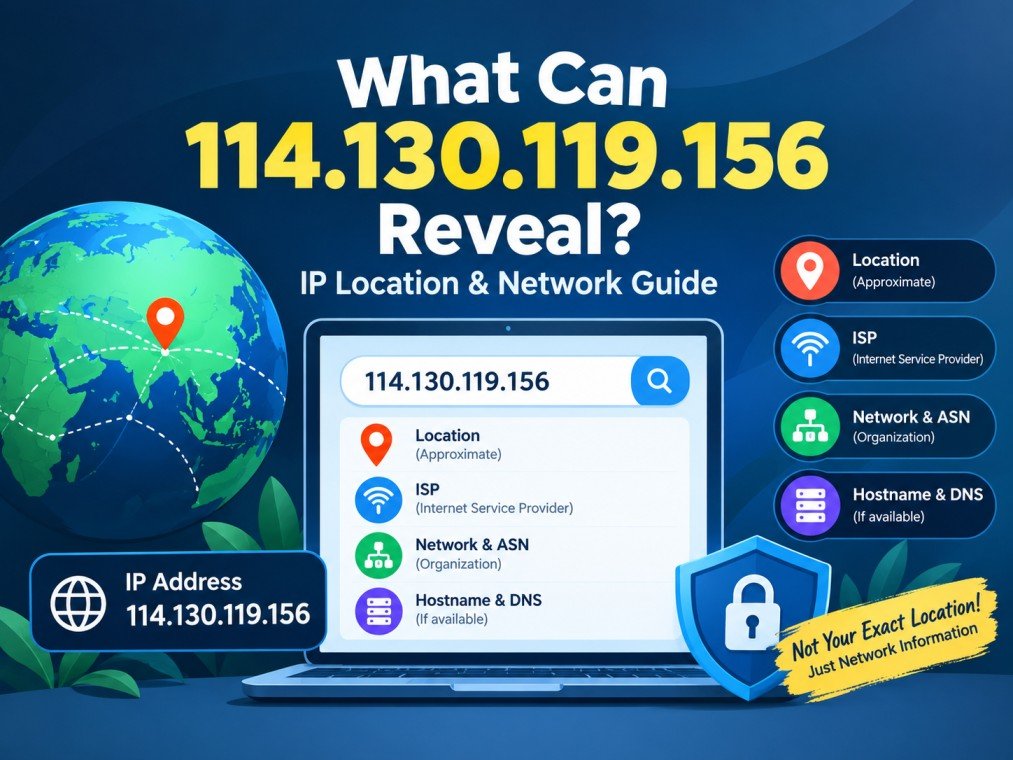
Every device connected to the internet communicates through network addresses. A public IP address, such as 114.130.119.156, can provide useful information about an internet connection, its network provider, and its approximate geographic location.
But what can you actually discover from this IP address? Can it reveal a person’s identity, exact location, or internet activity?
In this guide, we explain how IP address lookup works, what information may be available for 114.130.119.156, and how to interpret the results responsibly.
What Is IP Address 114.130.119.156?
The address 114.130.119.156 is written in IPv4 format. IPv4 addresses contain four numerical sections separated by dots, with each section ranging from 0 to 255.
An IP address helps networks route data between connected devices and online services. Public IP addresses may be associated with internet service providers, businesses, hosting companies, or other network operators.
To investigate this particular address, you can use an IP lookup service to check its registration information, network details, and estimated geographic location.
Important: Specific details about the current provider, location, and network owner should be verified using up-to-date lookup records rather than assumed from the address alone.
What Information Can This IP Address Reveal?
An IP lookup can provide several types of network information, depending on the available databases and registration records.
1. Approximate Geographic Location
An IP geolocation tool may estimate the country, region, or city associated with an IP address. This information can help you understand the general area from which a network connection appears to originate.
However, IP geolocation is not the same as GPS tracking. The reported location may represent an internet provider’s gateway, a network registration area, or a server location rather than the user’s actual location.
2. Internet Service Provider (ISP)
An IP lookup may identify the internet service provider or network organization associated with 114.130.119.156.
This can help network administrators investigate unfamiliar traffic, understand connection sources, and troubleshoot network-related problems.
The organization listed in a database is not necessarily the individual or business currently using the address.
3. Network Ownership and ASN
An Autonomous System Number (ASN) identifies a network operator that manages internet routing for a group of IP addresses.
Checking the ASN and registration records can help determine which organization announces or manages the relevant network range. These details are particularly useful for technical investigations and network troubleshooting.
4. Hostname and DNS Information
Some IP addresses have a reverse DNS record, also called a PTR record. This record may associate the address with a hostname.
A hostname can sometimes provide clues about the network or server’s purpose, but not every IP address has a reverse DNS record. Its absence does not automatically indicate suspicious activity.
5. Network and Hosting Information
Depending on the lookup service, you may also find information about the network range, organization, and whether the address is associated with hosting infrastructure or a known proxy or VPN service.
These indicators can be useful when investigating server logs, unusual login attempts, or unfamiliar network connections. They should be treated as clues rather than definitive proof.
Can You Find Someone’s Exact Location Using 114.130.119.156?
No. An IP address lookup cannot reliably reveal someone’s exact physical location.
Public lookup tools generally provide approximate geographic information. They do not normally reveal a verified person’s name, home address, phone number, or live GPS coordinates.
Several factors can affect location accuracy:
- VPN services: A VPN may show the location of its exit server instead of the user’s actual location.
- Mobile networks: A mobile connection may route traffic through a gateway in another city.
- Shared connections: Multiple people may use the same public IP address.
- Dynamic IP addresses: An internet provider may assign different addresses to a customer over time.
- Hosting services: An IP address may identify a data centre or server rather than a personal device.
For these reasons, an IP address alone is not sufficient to identify an individual. Subscriber information, when relevant, is held by the internet provider and is subject to applicable legal and privacy requirements.
How to Check IP Address 114.130.119.156
You can investigate this address using publicly available IP lookup and registration tools.
1. Use an IP Geolocation Lookup Tool
An IP geolocation service can help you check the estimated country, region, city, and available network details associated with an IP address.
Enter 114.130.119.156 into the lookup field and review the results.
You can start with WhatIsMyIP.com IP Address Lookup.
2. Check WHOIS or RDAP Records
WHOIS and Registration Data Access Protocol (RDAP) services provide public registration information about IP address allocations and the organizations responsible for managing them.
These records can help you identify the registered network organization and find relevant registration details.
Visit ICANN Lookup to explore available registration information.
3. Perform a Reverse DNS Lookup
A reverse DNS lookup checks whether an IP address has a published hostname.
If a record exists, the hostname may offer additional information about the network or server. However, reverse DNS does not identify the person using an IP address.
4. Compare Multiple Lookup Sources
Different IP lookup providers may display different locations or organization names because their databases use different sources and update schedules.
For better results, compare geolocation information with network registration records. Treat any conflicting information as an indication that further verification may be necessary.
Why Is IP Address Information Useful?
IP address analysis can support several legitimate tasks.
- Network troubleshooting: Investigate connection problems and unexpected routing behaviour.
- Security monitoring: Review unfamiliar IP addresses appearing in server or firewall logs.
- Website analytics: Understand the approximate geographic distribution of website visitors.
- Fraud prevention: Use network information as one signal when reviewing suspicious activity.
- Server administration: Identify network operators and registration contacts when investigating technical issues.
An IP address should not be treated as conclusive evidence of fraud or malicious activity. Legitimate users may share addresses, use VPNs, or connect through networks that appear in unexpected locations.
Is 114.130.119.156 a Public or Private IP Address?
The address 114.130.119.156 falls outside the standard IPv4 private address ranges. It is therefore classified as a public IPv4 address.
Private IPv4 addresses are generally used within local networks and are not directly routable across the public internet. Public IP addresses, by contrast, can be used for communication across internet networks, subject to routing and access controls.
Being a public IP address does not automatically mean that a device or service is directly accessible from the internet. Firewalls, network address translation, and other security measures can restrict access.
How Can You Tell Whether an IP Address Is Suspicious?
An unfamiliar IP address does not necessarily indicate a security threat. Its significance depends on the activity associated with it.
If you find 114.130.119.156 in a website log, login record, or firewall report, consider the following checks:
- Review the date, time, and type of connection associated with the address.
- Check whether the activity matches expected website or application behaviour.
- Consult reputable IP reputation databases for known abuse reports.
- Look for repeated failed logins, unusual request patterns, or other suspicious indicators.
- Apply appropriate security controls if the evidence supports further action.
Avoid blocking an address solely because its geolocation looks unexpected. Shared networks, VPNs, and legitimate automated services can produce misleading results.
Frequently Asked Questions (FAQs)
What country is IP address 114.130.119.156 from?
The country should be verified using a current IP geolocation database. The IP address alone does not establish a precise physical location, and lookup results may vary between providers.
Can 114.130.119.156 reveal a person’s name?
No. A public IP lookup does not normally provide a verified individual’s name or identity. It primarily reveals network and approximate location information.
Can I find the ISP for 114.130.119.156?
Potentially, yes. A current IP lookup or registration database may identify the network operator or internet service provider associated with the address.
Does an IP address reveal browsing history?
No. An IP lookup cannot show a person’s complete browsing history, messages, passwords, or private online accounts. Access to other information depends on the service, its records, and applicable legal requirements.
Can an IP address reveal an exact home address?
Generally, no. Public IP geolocation tools provide estimates and cannot reliably identify a person’s exact home address.
Is 114.130.119.156 dangerous?
An IP address is not inherently dangerous. To assess a potential threat, review relevant connection logs, security alerts, reputation databases, and the circumstances in which the address appeared.
What is the difference between an IP lookup and an IP tracker?
An IP lookup provides information associated with an IP address, such as its estimated location or network provider. The term IP tracker can refer to tools that record IP addresses when users access a website or service. Neither method automatically provides a person’s exact location.
Final Thoughts
The IP address 114.130.119.156 can be investigated to learn more about its network registration, associated provider, approximate location, and available DNS information.
However, the accuracy of these details depends on current records and the quality of the lookup database. An IP address is best understood as a network identifier, not a direct identifier of a person.
For reliable results, compare geolocation data with official registration records and use the information responsibly when troubleshooting networks or investigating security events.
Disclaimer: IP geolocation and registration information may be incomplete or outdated. This article is for informational and educational purposes and does not establish the identity or precise location of any individual.