Relationships with narcissists do not last long. They often start with feelings and a deep connection. Over time, things get confusing, and the narcissist starts to control and criticise. This causes a lot of pain.
Many people who have been in these relationships say they felt stuck. The relationship would switch between being loving and being cruel. This pattern of behaviour is called the cycle of abuse.
The cycle is meant to make the person dependent on the narcissist. It also keeps them confused and tired. Understanding this pattern can help people see the behaviour. They can then start to feel clear and heal.
What Is the Narcissist Cycle of Abuse?
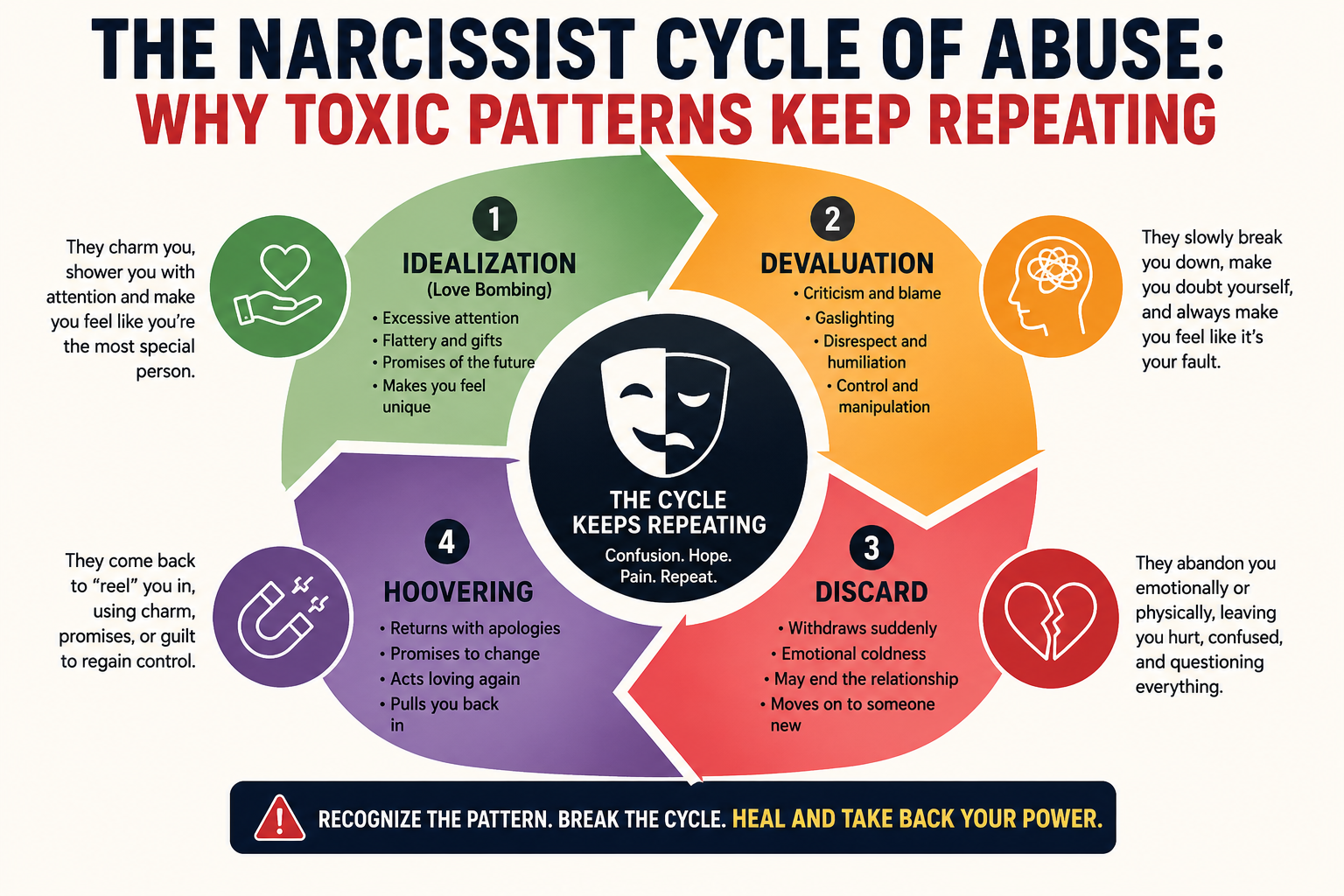
The narcissist abuse cycle keeps repeating. It’s a pattern of manipulation used to control someone.
Narcissists usually follow stages that make the victim feel good and then bad. This makes it hard for them to leave.
Most situations are not the same. However, the cycle often has these parts:
- Idealization
- Devaluation
- Emotional Withdrawal or Discard
- Hoovering
These phases can go on for months or even years. A narcissist abuse cycle has idealisation and devaluation. Emotional withdrawal or discard comes next. After that, they do re-engagement or Hoovering. This cycle of abuse repeats.
The Idealization Stage: Creating Emotional Attachment
When you first start dating a narcissist, they seem nice. They are very charming. They pay a lot of attention to you. They make you feel like you are the person in the world. This can be an exciting time because the narcissist is trying very hard to get close to you fast.
You might feel like this person really gets you and that they think you are amazing. You might even feel safe with them.
Some things that narcissists do during this time include:
- Giving you lots of compliments
- Texting you all the time
- Doing romantic things for you
- Getting very close to you quickly
- Talking about getting married or what your future will be like together
- Making you feel like you are the one for them
This is sometimes called love bombing. The narcissist is giving you so much attention and affection that it can be overwhelming. The narcissist does this to make you feel special and to make you like them.
Why the Idealization Phase Feels So Powerful
Narcissists usually copy what the other person wants and needs. They want to know what makes this person happy and loved. Then they use this information to get very close to them quickly.
The strong feelings that happen at the beginning can make it hard for the person to see when they are being treated badly. This is because they keep thinking that the narcissist will go back to being the person they were at the start. The person keeps hoping that the narcissist they loved will come back.
The Devaluation Stage: Gradual Emotional Abuse
When the narcissist feels safe in the relationship, they start to act. They do not show much love and care as they used to. Instead they try to control the person’s feelings.
This can happen slowly. At first the narcissist might just say some things that hurt. After a while, their behaviour can really hurt the other person’s feelings.
Some signs that the narcissist is not valuing the relationship anymore include:
- Criticism
- Making fun of the person or humiliating them
- Blaming the person for everything
- Withdrawing emotionally
- Being very jealous and possessive
- Acting aggressively
- Giving the treatment
- Gaslighting
- Trying to control the person
The person on the receiving end often gets very worried and tries even harder to make the narcissist happy. They do this because they want the relationship to work. The narcissist and their behaviour can be very confusing for the person. The other person just wants the love and care that the narcissist used to show them, so they try to do everything they can to get it back.
How Gaslighting Creates Confusion
Gaslighting is bad news. It is something that people with tendencies do to manipulate others when they are not interested in them anymore. They do things like deny what is really going on, twist what people say and make them doubt their thoughts and memories.
Gaslighting can take forms, such as:
- You are just making that up.
- You always find problems where there are none.
- That never happened; you must be mistaken.
- You are. Being too sensitive.
When people are treated like this for a time, they may start to lose faith in their own ability to make good decisions, and they may become too reliant on the narcissist’s version of what is real. Gaslighting is a problem because it makes the victim of gaslighting question their own sanity and it makes them trust the narcissist more than they trust themselves. The narcissist uses gaslighting to control the victim of gaslighting and make them do what the narcissist wants.
Emotional Dependency and Trauma Bonds
One reason people who have been hurt in a relationship have a hard time leaving is because of something called trauma bonding. This trauma bonding happens when someone is being hurt emotionally. Sometimes they are also being nice to them or saying sorry.
The person who is being hurt gets really attached to this back and forth of being treated and then sometimes being treated nicely.
This can cause a lot of problems, like
- Addiction
- Feeling anxious all the time
- Being scared of being left alone
- Thinking about the relationship all the time
- Having a time leaving the relationship even when it is still hurting them
The brain starts to look for that good feeling that comes at the beginning of the relationship when everything seems perfect and trauma bonding is really strong. Trauma bonding is what makes people stay in these relationships.
The Discard Stage: Sudden Emotional Rejection
The cycle goes on and on. Then the narcissist starts to pull away from the other person. They do this by not being emotionally close to them, or they just end the relationship all of a sudden. This is what people call the phase.
When the narcissist gets to this phase, they might do things like the following:
- Ignore the person they were with completely
- Act really cold and uncaring
- End the relationship
- Start dating someone really quickly
- Say mean things about the person in public
- Blame the person for everything that went wrong
The narcissist stops caring all of a sudden, and this can be really shocking and hurtful to the person they were with. It leaves them feeling really upset and sad. The narcissist just does not care about the person’s feelings during the discard phase. The person who was with the narcissist is often left feeling devastated by the narcissist’s actions.
Why Narcissists Discard Their Victims
Narcissists see relationships as a way to get what they want, like people liking them or looking up to them. They do not really care about how the other person feels. When a narcissist gets bored or does not feel in charge, they will look for someone to pay attention to them.
The part where they get rid of someone is usually about being in charge of people’s emotions, not about loving them.
Hoovering: Pulling the Victim Back
After a breakup, many people with narcissistic tendencies try to get back into their ex’s life. This is a manipulation tactic known as hoovering.
Hoovering can include things like:
- Emotional apologies
- Showing affection
- Making promises to change
- Pretending to improve themselves
- Sending messages that say they are sorry
- Trying to make the victim feel guilty or sympathetic
The person, with tendencies, often knows when their ex is getting better or moving on, and they try to control their emotions again.
Sadly, when the victim goes back, the same cycle usually starts over.
Psychological Effects of the Abuse Cycle
Being around someone with personality for a long time can really hurt your emotional health. People who go through this often feel:
- Chronic anxiety
- exhaustion
- Depression
- Panic attacks
- self-worth
- Isolation
- Self-doubt
- Difficulty trusting others
Many people who are victims of abuse feel totally worn out emotionally. This is because they spend much time trying to stay away from fights or get the other person to like them again. Narcissistic abuse can be very damaging to the people who experience it. It can take a long time to recover from the effects of narcissistic abuse.
Common Signs You Are Trapped in the Cycle
You might be going through a relationship if:
- The relationship keeps swinging between being really nice and really mean
- You feel all mixed up after fights with your partner
- You say sorry even when you haven’t done anything
- You are scared to upset your partner
- You feel like you need those moments of kindness to feel okay
- You keep wondering if you are the problem
- You have a time leaving even when it hurts you emotionally
Knowing these signs is really important for taking care of your feelings and mind.
How to Break the Narcissistic Abuse Cycle
Breaking free from abuse is really tough, and it takes a lot of emotional strength. You have to be aware of what’s happening to you. You need people who care about you to support you. It is possible to get better after abuse. It is not easy. You have to rebuild your confidence. You have to learn what is okay. What is not okay. This means you have to establish boundaries for yourself. Breaking free from abuse and staying free requires a lot of work on yourself and your emotional strength.
Accept the Reality of the Relationship
Many people who have been through an experience with a narcissist stay in the situation because they think the narcissist will go back to being kind and loving like they were at first. The truth is that people need to accept what is really happening with the abuse, and that is a part of getting better. People need to understand that the narcissist is not going to change and that they will keep hurting them. Accepting the reality of the abuse cycle that the narcissist uses is a step for people to heal from the hurt that the narcissist has caused.
Create Emotional Boundaries
Setting boundaries is really important. It helps stop people from taking advantage of you. When you do not let people get too close to you emotionally, it can really help you stay sane and protect your health. Healthy boundaries are like a shield for your health.
Seek Professional Support
Therapists and support groups are really helpful for people who have been through abuse. These people can get help from trauma-informed counselling to deal with what they went through. This kind of counselling can help survivors of abuse feel better about themselves and rebuild their self-esteem. Survivors of abuse can use therapists and support groups to talk about their feelings and get the help they need.
Reduce Contact When Possible
Some people who have been through a time can get better when they do not see the other person very much or when they do not see them at all. This is especially true if the other person is still trying to control them even after they’re not together anymore. People who have been hurt can heal quickly when they have limited contact with the person who hurt them or when they have no contact with that person at all.
Healing After Narcissistic Abuse
Recovery from abuse takes a long time. Many survivors still struggle with things that upset them, such as trust problems and self-doubt, even after the relationship is over.
Healing starts to happen when survivors realise that the abuse was not their fault.
Over time survivors can do the following:
- Rebuild their self-confidence
- Set boundaries
- Trust themselves again
- Make relationships that feel safe emotionally
- Be independent again
Learning and understanding are very important for recovery.
Final Thoughts
The narcissist abuse cycle is a tough thing to deal with. It is a pattern of manipulation that keeps people trapped. This happens because of confusion and hope and fear and emotional dependency on the narcissist. The narcissist abuse cycle keeps happening because narcissists are one minute and mean the next. This makes the victim feel really unstable and unsure of themselves.
If people understand how narcissists work they can see when a relationship is not good for them. They can then try to get out of it and feel better about themselves. Love should be nice. Not make you feel scared or unsure of yourself. It should not make you feel like you have to do what the other person says all the time.
It is hard to stop the abuse cycle but people can get better with some help and by being kind, to themselves. The narcissist abuse cycle can be. People can heal and recover from it.
FAQs
What are the stages of the narcissist cycle of abuse?
The cycle typically includes idealisation, devaluation, discard, and hoovering.
Why do victims stay in narcissistic relationships?
Trauma bonding, emotional dependency, fear, confusion, and hope for change often make leaving difficult.
Can narcissistic abuse cause emotional trauma?
Yes. Long-term emotional manipulation can lead to anxiety, depression, low self-esteem, and emotional exhaustion.
What is ‘hoovering’ in narcissistic abuse?
Hoovering is when a narcissist attempts to pull a victim back into the relationship through manipulation, affection, or false promises.
How can someone recover from narcissistic abuse?
Recovery often includes therapy, emotional support, healthy boundaries, self-care, and rebuilding self-confidence.